
 简体中文
简体中文 English
 Русский язык

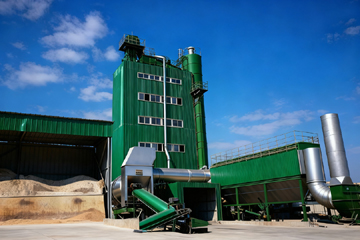
The selection of fuel for asphalt mixing plants is a comprehensive decision involving cost, efficiency, environmental protection, and operational feasibility. Currently, mainstream fuels include diesel, heavy oil, and natural gas, while coal, biomass fuel, and PMC new solid fuel are also alternative options in some regions or specific scenarios.
I. Detailed Comparison of Various Fuels
(I) Traditional Liquid Fuels
1. Diesel
Advantages:
· High Combustion Efficiency and Stability: High combustion efficiency and stable heat output ensure uniform heating of aggregates and consistent asphalt quality.
· Ease of Use: No special pretreatment required; widely available with relatively convenient acquisition and storage.
Disadvantages:
· Highest Cost: The most expensive among traditional fuels, significantly increasing operational expenses.
· Environmental Pollution: Combustion emits a relatively high amount of pollutants such as nitrogen oxides and particulate matter.
2. Heavy Oil
Advantages:
· Lower Cost: Typically priced lower than diesel, helping to reduce fuel costs.
· High Calorific Value: Can provide large quantities of heat to meet the needs of large-scale mixing plants.
Disadvantages:
· Pretreatment Equipment Required: Needs heating and filtration before use, increasing initial equipment investment and maintenance costs.
· Significant Environmental Pollution: Combustion releases large amounts of sulfides, nitrogen oxides, and particulate matter, resulting in poor environmental performance.
· Storage and Safety Risks: Certain safety and environmental risks are associated with storage and transportation.
(II) Gaseous Fuel
3. Natural Gas
Advantages:
· Clean and Environmentally Friendly: Minimal pollutant emissions (e.g., sulfides, particulate matter) after combustion; currently the cleanest fossil fuel, easily meeting strict environmental standards.
· Efficient and Stable: Modern burners enable precise control, high combustion efficiency, and stable operation.
· Stable Supply: Pipeline natural gas provides a continuous and reliable supply.
Disadvantages:
· Supply Limitations: In areas without pipeline coverage, CNG/LNG skid-mounted stations are necessary, leading to high or unstable gas supply costs.
· High Initial Investment: Requires pipeline laying or gasification station construction; costs for burner modification or procurement are relatively high.
· Fuel Cost: Usually more expensive than coal and heavy oil.
(III) Solid and Other Fuels
4. Coal
Advantages:
· Low Cost: The lowest fuel cost with stable and widespread supply.
Disadvantages:
· Severe Environmental Pollution: Combustion produces large amounts of sulfur dioxide, nitrogen oxides, dust, and carbon dioxide, creating immense environmental pressure. Its use is restricted or banned in many regions.
· Lower Energy Efficiency: Relatively low energy utilization efficiency.
· High Storage and Transportation Costs: High costs for transportation and storage, with strict requirements for site space.
5. Biomass Fuel
Advantages:
· Environmentally Friendly and Renewable: Theoretically carbon-neutral, with wide sources; classified as renewable energy with minimal environmental impact.
Disadvantages:
· Low Calorific Value: Low calorific value per unit mass, potentially requiring larger or specialized combustion equipment.
· Storage and Transportation Challenges: Low fuel density leads to large storage space requirements; prone to moisture absorption and high transportation costs.
· Technology Maturity: Application technology in asphalt mixing plants is relatively underdeveloped and less widespread.
6. PMC New Solid Fuel
Advantages:
· Outstanding Economical Efficiency: Low cost per unit calorific value, approximately 60% cheaper than diesel, significantly reducing production costs.
· Good Combustion Performance: High burnout rate, full and stable combustion, with theoretical thermal efficiency about 10% higher than heavy oil.
· Relatively Good Environmental Performance: Lower pollutant emissions compared to coal and heavy oil.
· Low Maintenance Costs: Minimal equipment wear, reducing equipment failure rates and maintenance expenses.
Disadvantages:
· High Initial Investment: Imported solid fuel and dedicated burner systems are expensive.
· Import-Dependent Supply: Currently relies mainly on imports, posing potential supply chain risks.
II. Key Decision Factors and Burner Selection
(I) Decision Considerations
1. Cost-Benefit Analysis: Conduct a comprehensive comparison of fuel prices, equipment modification/investment costs, maintenance costs, and environmental taxes.
1. Environmental Regulations: The stringency of local environmental requirements is a decisive factor. In regions with strict standards, natural gas and PMC new solid fuel are better choices.
1. Resource Availability: Evaluate which fuel has the most stable, convenient, and cost-controllable supply in the local area.
1. Production Requirements: Select fuels with stable calorific value and strong controllability based on the mixing plant’s scale, production intensity, and asphalt quality requirements.
(II) Importance of Burner Selection
Regardless of the fuel chosen, efficient and dedicated burners are crucial. Modern burners can precisely control the mixture of fuel and air, ensuring complete combustion to improve thermal efficiency while significantly reducing emissions of pollutants such as nitrogen oxides. They are key equipment for meeting both environmental and production requirements.
III. Summary and Trends
Demand Orientation | Recommended Fuel | Core Characteristics |
Pursuing Environmental Protection & Stable Production | Natural Gas | Optimal comprehensive performance, especially suitable for regions with high environmental requirements. |
Pursuing Ultimate Cost Control (Where Environmentally Permitted) | Heavy Oil, Coal | Formerly mainstream options; their application is gradually declining due to environmental pressure. |
New Economical & Eco-friendly Option | PMC New Solid Fuel | Combines economic benefits and environmental performance; needs to overcome challenges related to initial investment and supply chains. |
Future Renewable Direction | Biomass Fuel | An exploration direction for sustainable development; currently limited by factors such as calorific value, storage/transportation, and technology maturity. |
IV. Final Recommendation
Enterprises should conduct a comprehensive technical and economic analysis based on local environmental policies, fuel supply networks, investment budgets, and long-term operating costs to make the most reasonable fuel selection. Meanwhile, investing in advanced burner technology is a common guarantee for achieving cost reduction, efficiency improvement, and green production.