
 简体中文
简体中文 English
 Русский язык

Abstract
Keywords
1. Introduction
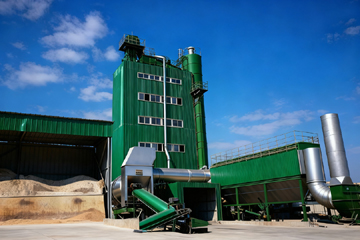
2. Production Characteristics and Safety Risks of Asphalt Mixing Plants
2.1 Production Characteristics
High Temperature and Pressure Environment: The heating and mixing process of asphalt mixture requires a stable high-temperature and high-pressure environment, with temperatures typically ranging between 150°C and 180°C. This places high demands on the heat resistance of equipment and the standardization of operation.
Complex Multi-material Mixing: The production involves a variety of materials with distinct properties, including aggregates (crushed stones and sand of different particle sizes), asphalt (base asphalt or modified asphalt), and fillers (mineral powder, etc.). The mixing ratio must be precisely controlled to ensure the quality of the asphalt mixture, which increases the complexity of the production process.
Continuous Production Mode: To meet the continuity of road construction, asphalt mixing plants usually adopt a 24-hour continuous production mode, requiring equipment to operate stably for a long time and bear production loads without interruption.
2.2 Safety Risks
Fire and Explosion Risk: In high-temperature environments, asphalt is prone to volatilizing flammable gases. At the same time, dust (such as mineral powder and coal powder) generated during aggregate crushing and transportation may reach the explosion limit. When encountering open flames or static electricity from equipment, it is highly likely to trigger fire or explosion accidents.
Mechanical Injury Risk: Asphalt mixing plants are equipped with a large number of rotating and transmission equipment, such as conveyor belts, mixing cylinders, and crushers. If protective devices are missing or operators approach in violation of regulations, it may lead to mechanical injuries such as limb entanglement and impact.
High-Temperature Burn Risk: Heated asphalt mixture (150-180°C), hot aggregates, and high-temperature surfaces of equipment (such as heating drums and pipelines) can cause severe burns to operators if they come into contact with them or if protection measures are improper.
Dust Pollution Risk: Dust generated during aggregate crushing, screening, and filler transportation not only pollutes the surrounding atmospheric environment but also causes occupational diseases such as pneumoconiosis in operators after long-term inhalation.
Chemical Hazard Risk: Polycyclic aromatic hydrocarbons in asphalt and chemical substances in additives (such as anti-stripping agents and modifiers) may irritate the skin and respiratory tract of operators after long-term contact, and even cause chronic poisoning.
3. Analysis of Factors Influencing Safety Production
3.1 Human Factors
Insufficient Skill Level of Operators: Some operators have not received systematic training and are not familiar with the working principles of equipment and operating procedures. For example, incorrect operation of the asphalt pump pressure regulating valve or failure to clean the material deposits in the mixing cylinder in a timely manner may easily lead to equipment failures or safety accidents.
Weak Safety Awareness: Employees often have a sense of luck, and non-standard operations are common. For instance, entering the production area without wearing safety helmets or protective gloves, or not using dust masks in environments with excessive dust concentrations, increases the risk of accidents.
Lack of Management Systems: Enterprises have not established sound safety management systems and operating procedures, and job responsibilities are vague. For example, the frequency of equipment inspection is not clearly defined, and dust concentration detection standards are not formulated, resulting in safety management being a mere formality.
3.2 Equipment Factors
Severe Equipment Aging: To reduce costs, some enterprises use equipment that has exceeded its service life for a long time (such as heating drums and conveyor belts used for more than 10 years). Parts of the equipment (such as bearings and seals) are severely worn, which may easily lead to failures such as drum cracking and conveyor belt breakage.
Improper Maintenance: No regular maintenance plan is formulated, or maintenance is superficial. For example, only the appearance of the equipment is cleaned, while the internal lining of the mixing cylinder and the lubricating oil of the transmission system are not inspected and replaced, resulting in equipment "operating with faults".
Missing or Invalid Safety Devices: Key equipment lacks necessary safety devices, such as no emergency stop buttons installed on the mixing cylinder and no protective guardrails on both sides of the conveyor belt. Some installed safety devices (such as temperature alarms and dust detectors) become invalid due to lack of calibration and cannot warn of risks in a timely manner.
3.3 Environmental Factors
Abnormal Temperature and Humidity: In summer, when the outdoor temperature is ≥35°C, equipment heat dissipation is difficult, which may easily lead to motor overload failures. At the same time, operators are prone to heatstroke. In rainy seasons, high-humidity environments may cause short circuits in electrical equipment (such as control cabinets and motors) due to moisture.
Poor Ventilation Conditions: If closed or semi-closed production workshops are not equipped with ventilation systems, the dust concentration will rise rapidly (far exceeding the national standard limit of 4mg/m³), which not only endangers the health of personnel but also increases the risk of dust explosion.
Insufficient Lighting Conditions: At night or in rainy weather, the lighting brightness in production areas (such as equipment maintenance platforms and conveyor belt joints) is insufficient, which may easily cause operators to misjudge the equipment status and lead to maintenance accidents or operational errors.
4. Safety Production Management Measures
4.1 Strengthening Personnel Training to Improve Safety Literacy
Regular Systematic Training: Organize safety training once a month, covering equipment operating procedures (such as asphalt heating temperature control and mixing cylinder cleaning process), safety risk identification (such as signs of dust explosion and prevention of mechanical injuries), and occupational disease protection (such as correct wearing of dust masks). After training, a theoretical + practical assessment is required, and those who fail the assessment are suspended from work.
Normalized Emergency Drills: Conduct targeted emergency drills once a quarter, including emergency response to fire and explosion (such as using dry powder fire extinguishers and activating the fire water system), first aid for mechanical injuries (such as limb hemostasis and fracture fixation), and rescue of heatstroke personnel. After the drill, a review and summary are required to optimize the emergency plan.
Establishing a Dynamic Assessment Mechanism: Incorporate safety performance into employee performance evaluation, set up the "Safety Model" award, and reward employees who have no irregular operations and timely detect safety hazards. For employees who have frequent irregular operations and fail the assessment, arrange on-the-job training until they meet the requirements.
4.2 Improving Equipment Management to Ensure Operational Safety
Formulating Refined Inspection Plans: According to the service life and working intensity of equipment, formulate a "weekly inspection + monthly inspection + annual inspection" plan:
Weekly inspection: Focus on checking the tension of the conveyor belt and the oil volume of the lubrication system;
Monthly inspection: Focus on detecting the temperature sensor of the heating drum and the wear of the lining of the mixing cylinder;
Annual inspection: Conduct a comprehensive disassembly of the equipment, replace aging parts (such as bearings and seals), and conduct no-load + load tests after inspection to ensure the equipment meets the standards.
Promoting Equipment Upgrading and Replacement: Eliminate equipment that has exceeded its service life and has frequent failures (such as mixing hosts used for more than 8 years), introduce automated equipment (such as intelligent asphalt temperature control systems and unmanned conveyor belts), and install intelligent monitoring devices (such as vibration sensors and temperature alarms) on key equipment to realize real-time monitoring of equipment status and automatic early warning of abnormal conditions.
Equipping and Calibrating Safety Devices: Install protective guardrails and emergency stop buttons on all rotating equipment (such as crushers and mixing cylinders), and the buttons should be set in positions easily accessible to operators. Calibrate safety devices such as temperature alarms, dust detectors, and pressure gauges every month to ensure accurate data, and immediately replace invalid devices.
4.3 Optimizing Environmental Management to Improve Production Conditions
Upgrading the Ventilation and Dust Removal System: Install bag filters + negative pressure ventilation systems in the filler warehouse and mixing workshop to ensure the dust concentration in the workshop is ≤2mg/m³; install explosion-proof exhaust fans in the asphalt heating area to accelerate the diffusion of flammable gases.
Strengthening Temperature and Humidity Control: Install industrial air conditioners in the equipment room in summer to control the indoor temperature ≤30°C; place dehumidifiers around electrical equipment in rainy seasons and regularly check the insulation performance of electrical equipment; provide cooling equipment (such as safety helmet fans and cooling vests) for operators.
Improving Lighting Facilities: Install LED explosion-proof lighting lamps in production areas (such as equipment maintenance platforms, conveyor belt corners, and raw material stacking areas) to ensure the lighting brightness ≥500lux; install local spotlights at key operation points (such as the asphalt pump control panel and the observation port of the mixing cylinder) to reduce visual blind spots.
4.4 Strengthening Safety Management to Consolidate the Responsibility Chain
Improving Safety Management Systems: Formulate documents such as the Safety Production Management System for Asphalt Mixing Plants, Equipment Operating Procedures, and Emergency Plan, clearly define the safety responsibilities of each position (such as the station manager being responsible for overall safety management, the equipment manager being responsible for equipment inspection, and the operator being responsible for self-inspection of post safety). The systems should be posted in prominent positions in the production area and organized for learning regularly.
Strengthening Full-Process Supervision and Inspection: Appoint full-time safety supervisors to conduct daily inspections in the production area, focusing on checking whether operators have irregular operations, whether the safety devices of equipment are intact, and whether the environmental conditions meet the standards. If hidden dangers are found, issue a Rectification Notice immediately, clarify the person responsible for rectification and the time limit for rectification, and conduct acceptance confirmation after rectification.
Standardizing the Accident Handling Process: After a safety accident occurs, immediately activate the emergency plan, organize rescue, and report to the local emergency management department at the same time. After the accident is stabilized, set up an investigation team to conduct an in-depth analysis of the cause of the accident (such as tracing the maintenance records for equipment failures and verifying the training records for operational errors), form an accident report, and clarify the responsible personnel. At the same time, incorporate the accident case into the training content and organize all employees to learn to prevent similar accidents from happening again.
5. Case Analysis
5.1 Case Background
5.2 Accident Cause Investigation
Equipment Aging and Lack of Maintenance: The mixing cylinder of the plant had been used for 10 years and had not undergone planned annual inspections. The internal lining of the cylinder was severely worn, leading to friction between aggregates and the cylinder wall and generating high-temperature sparks. At the same time, the temperature sensor of the mixing cylinder had been invalid for 3 months and had not been replaced in a timely manner, making it impossible to monitor the abnormal high temperature inside the cylinder.
Improper Operation by Operators: To improve production efficiency, the operators arbitrarily increased the asphalt heating temperature from 170°C to 190°C, resulting in a significant increase in the volatilization of asphalt and the accumulation of flammable gases in the mixing cylinder. Moreover, when abnormal noises were found in the mixing cylinder, they did not stop the machine for inspection in accordance with the procedures but continued production.
Safety Devices Being Nominal: No emergency stop button was installed on the mixing cylinder, so the operators could not cut off the equipment power supply quickly in the early stage of the fire. In addition, the ventilation system of the workshop had failed and had not been repaired in a timely manner, making it impossible to diffuse flammable gases and dust and intensifying the explosion.
5.3 Corrective Measures and Effects
Comprehensive Update of Equipment and Safety Devices: The aging mixing cylinder was eliminated, and an intelligent mixing host was replaced. Dual sensors for temperature and pressure were installed. At the same time, emergency stop buttons and explosion-proof exhaust fans were equipped for all key equipment. An electronic equipment ledger was established to clarify the inspection cycle, and a dedicated person was assigned to be responsible for the calibration of safety devices.
Strengthening Personnel Training and Assessment: All employees were organized to participate in accident review and training, focusing on learning the "operating specifications for high-temperature periods" and "equipment abnormal handling procedures". The assessment mechanism was revised, and asphalt temperature control and equipment abnormal reporting were included in the core assessment indicators. Only those who passed the assessment could take up their posts.
Strengthening Daily Supervision and Inspection: The number of safety supervisors was increased, and a "two-shift" inspection system was implemented to focus on monitoring the equipment status and operation behavior during the high-temperature period (10:00-16:00). Environmental testing was conducted once a week to ensure the workshop temperature ≤32°C and the dust concentration ≤2mg/m³.